For many consumer goods companies, trade promotions are the second-largest item on the P&L after cost of goods sold, yet few know what they get back for that spend. Plans are often built in home-grown spreadsheets by taking last year's plan and tweaking it, so promotions fail to deliver the ROI they should. Digitalising and optimising this process involves two different kinds of software:
- Trade Promotion Management (TPM) replaces spreadsheets and automates the transactional workflow of planning, funding, budgeting, reconciling and monitoring promotions.
- Trade Promotion Optimisation (TPO) adds advanced analytics, such as price elasticity and cannibalisation modelling, to explore what-if scenarios and optimise promotional programs against constraints like trading terms and market share objectives.
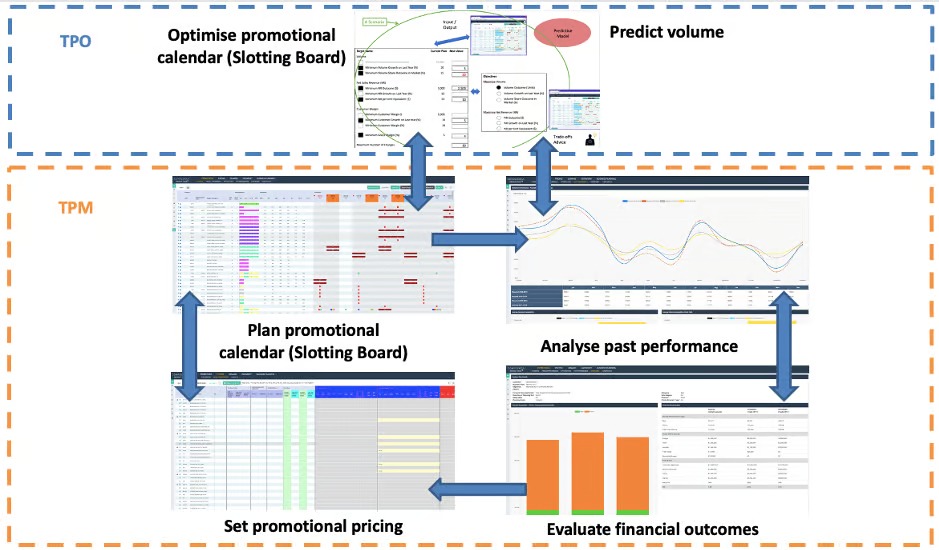
For companies wanting to replace the home-grown spreadsheets and automate the labour-intensive processes for data loading and handling, customer planning and budgeting, TPM is usually the starting point. Complexica's Trade Promotion Management (TPM) system can be used by a broad range of users – such as merchandisers, category teams, trade marketing, strategy and customer finance – for their transactional workflows associated with planning, managing (funding, budgeting and reconciling promotions) and monitoring promotional activities.
Complexica's Trade Promotion Optimisation (TPO) system, on the other hand, can enable advanced analytics around price elasticity and cannibalisation, as well as optimisation and what-if predictive modelling capabilities. TPO allows users to explore countless what-if scenarios, as well as run optimisation algorithms against various objectives and constraints, such as trading terms constraints, market share objectives, promotional guardrails, supplier constraints, category growth objectives, and more. The table below distinguishes between the two types of functionalities:

To perform their optimisation workflow, TPO systems extract data (both transactional data as well as promotional slotting boards) from TPM systems and then push back optimised promotion plans that deliver the right mix of category growth and sustainable share. Given the complexity of the business problem and the algorithmic techniques involved, it's important to note that no two deployments are the same. The algorithmic techniques are trained on each client's data, and the various constraints/objectives used by the optimiser are configured to each client's needs.
Deployment and benefits
Depending on business requirements, TPM and TPO components can be deployed together or in isolation. Key benefits include:
- Reduced time and labour required for creating new promotional plans
- Improved ROI on trade spend
- Better outcomes across the supplier-retailer value chain, as well as overall category
- Data-driven decisions and negotiations, leading to improved supplier-retailer relationships
To learn more about trade promotion optimisation, please watch our video from Chapter 3 of The Rise of Artificial Intelligence